


A few weeks ago, a whisky customer asked me a question that I believe is well worth addressing in writing:
“Why are some relatively young rum bottlings from the 1980s and 1990s so incredibly expensive? Are they really that good?”
He was primarily referring to the Demerara bottlings from Velier.
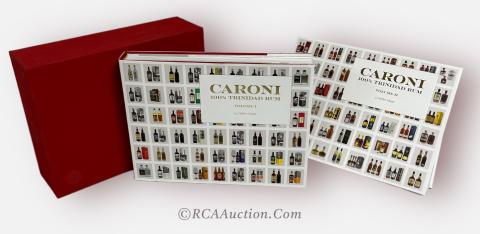
Caroni is widely known, and since the publication of the so-called “Caroni Bible” by Steffen Mayer, almost everything about those rums can be researched in detail.
Image
With the Demerara bottlings, the situation is similar. Even though there is no single, comprehensive book dedicated to the series, a great deal of information is available. Not least on platforms such as RumX, where both tasting notes and technical details can be found.
So what actually makes these bottlings so unique, and why is the price — at least in our view — relative?
As we know, some of these distillates originate from very old stills that no longer exist today, or that have since been relocated and would inevitably produce a different style of rum now. Some marks are so rare that only a handful of bottlings exist at all (Blairmont, Skeldon, La Bonne Intention, Albion, etc.).
This level of exclusivity, combined with the very small outturns per release, already makes these rums absolute rarities from a purely quantitative perspective.
Then there is quality — and here the key point was effectively printed on the labels by Luca Gargano himself. All of these rums were bottled at full proof, exactly as they came from the cask(s), after 100% tropical ageing, with angel’s share losses in some cases exceeding 80%.
This is where the explanation for both quality and uniqueness lies.
Anyone who has tasted some of these bottlings will agree that they are closer to a concentrate — in the best possible sense of the word. Full-bodied and oily, powerful, with aromas that fill the air immediately when poured. These Demerara rums, despite tropical ageing periods of sometimes less than ten years, have achieved a depth and complexity that some other spirits fail to reach even after 50 years in cask.
The intensity and character of the young distillate, combined with extreme evaporation, wood interaction, and oxidative ageing — this is precisely what makes these bottlings so special. And irreproducible.
Who today would — or even could — afford to age casks tropically for 10 to 20 years, only to bottle the remaining 15%? And at what price?
It is difficult to imagine. And that is exactly why the Velier Demerara bottlings represent a time capsule — a rare opportunity to acquire a piece of Guyana’s “liquid history,” whether for collecting or for drinking.
If you get the chance, try these rums via bottle splits on RumX or at tastings and festivals. With every bottle opened, the opportunity to experience them becomes a little smaller.
We are fortunate to regularly be able to offer such bottles at auction. Even in our current auction, you will find several outstanding examples in excellent condition, including original boxes.
Find Velier Bottlings in current auction